| Ilaria Catapano |
|
Nunzio Cennamo was born in 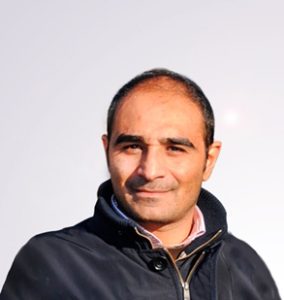 Italy in 1975. He received the master’s degree in Electronic Engineering in 2002 and the PhD degree in Electronic Engineering in 2005, both from the Second University of Naples, Naples, Italy. He is a full Professor in Electronics and Photonics at the University of Campania Luigi Vanvitelli, Naples (Italy). His research interests include the design and fabrication of optical sensors and biosensors, optical-chemical sensors, and optoelectronic devices. He is the author of more than 230 international journal and conference papers and about 20 patents. He is a co-founder of the Spin Off MORESENSE srl, based in Milan (Italy). He is an Associate Editor of Sensors (MDPI), Applied Sciences (MDPI), and Photonics Research (Optica). He is an OPTICA Senior Member. He is an Organizer and General Chair of several Internation Conferences, the IEEE “Sensor Applications Symposium” (IEEE SAS 2024), Naples (Italy) July 23-25, “7th International Symposium on Sensor Science” (I3S 2019) 9-11 May 2019, Naples (Italy), and of several editions of the “International Electronic Conference on Applied Sciences” (ASEC 2021, ASEC 2022, ASEC 2023, ASEC 2024, ASEC 2025). He is an organiser of two editions (the 6th and 7th) of the “IEEE International Symposium M&N (18-20 July 2022 Padua – Italy and 3-5 July 2024 Rome – Italy), and from 2025 is a member of the IEEE SAS Steering Committee. He has been an invited speaker at several Webinars, Summer Schools, and International Conferences. He is an organiser/Chair of several Special Sessions in International Conferences and a Member of several Scientific Committees. He is a Principal Investigator on several national Projects and the Coordinator of the Local Unit for national and international Projects (total budget of about 5 M Euros). Italy in 1975. He received the master’s degree in Electronic Engineering in 2002 and the PhD degree in Electronic Engineering in 2005, both from the Second University of Naples, Naples, Italy. He is a full Professor in Electronics and Photonics at the University of Campania Luigi Vanvitelli, Naples (Italy). His research interests include the design and fabrication of optical sensors and biosensors, optical-chemical sensors, and optoelectronic devices. He is the author of more than 230 international journal and conference papers and about 20 patents. He is a co-founder of the Spin Off MORESENSE srl, based in Milan (Italy). He is an Associate Editor of Sensors (MDPI), Applied Sciences (MDPI), and Photonics Research (Optica). He is an OPTICA Senior Member. He is an Organizer and General Chair of several Internation Conferences, the IEEE “Sensor Applications Symposium” (IEEE SAS 2024), Naples (Italy) July 23-25, “7th International Symposium on Sensor Science” (I3S 2019) 9-11 May 2019, Naples (Italy), and of several editions of the “International Electronic Conference on Applied Sciences” (ASEC 2021, ASEC 2022, ASEC 2023, ASEC 2024, ASEC 2025). He is an organiser of two editions (the 6th and 7th) of the “IEEE International Symposium M&N (18-20 July 2022 Padua – Italy and 3-5 July 2024 Rome – Italy), and from 2025 is a member of the IEEE SAS Steering Committee. He has been an invited speaker at several Webinars, Summer Schools, and International Conferences. He is an organiser/Chair of several Special Sessions in International Conferences and a Member of several Scientific Committees. He is a Principal Investigator on several national Projects and the Coordinator of the Local Unit for national and international Projects (total budget of about 5 M Euros).
|
| Alessandra Costanzo |
Gian Piero Galleran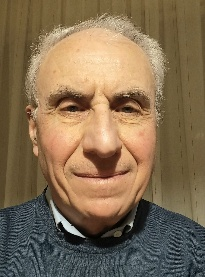 o studied Physics at the University of Rome, Italy, where he received his Laurea Degree (Ph.D.) with honors in 1980 with a thesis on the design and realization of a tunable color center laser in the near infrared. Afterwards he was a Research Fellow at the High-Power Laser Laboratory, ENEA Research Center, Frascati, where he became a Staff Researcher in 1983 dealing with the design of optical resonators for infrared free electron lasers and excimer lasers. In the years 2001-2004 he coordinated the European project THz-BRIDGE, involving ten research institutes in the study the interaction of THz radiation with biological systems. From 2010 to his retirement in 2022 he has been the Head of the Radiation Sources, Diagnostics and Laser-matter interaction Laboratory at ENEA-Frascati. He is an IOC member of the International Society of Infrared, Millimeter and THz Waves, IRMMW-THz. His current areas of interest include generation of THz radiation and its application in the biological, biomedical, environmental and art conservation fields, coherent emission from r.f. modulated electron beams, free electron lasers and their applications. He is author/co-author of about 300 publications with over 3500 citations, H-index 29, i10-index 79. He holds 3 international patents on the above subjects. o studied Physics at the University of Rome, Italy, where he received his Laurea Degree (Ph.D.) with honors in 1980 with a thesis on the design and realization of a tunable color center laser in the near infrared. Afterwards he was a Research Fellow at the High-Power Laser Laboratory, ENEA Research Center, Frascati, where he became a Staff Researcher in 1983 dealing with the design of optical resonators for infrared free electron lasers and excimer lasers. In the years 2001-2004 he coordinated the European project THz-BRIDGE, involving ten research institutes in the study the interaction of THz radiation with biological systems. From 2010 to his retirement in 2022 he has been the Head of the Radiation Sources, Diagnostics and Laser-matter interaction Laboratory at ENEA-Frascati. He is an IOC member of the International Society of Infrared, Millimeter and THz Waves, IRMMW-THz. His current areas of interest include generation of THz radiation and its application in the biological, biomedical, environmental and art conservation fields, coherent emission from r.f. modulated electron beams, free electron lasers and their applications. He is author/co-author of about 300 publications with over 3500 citations, H-index 29, i10-index 79. He holds 3 international patents on the above subjects. |
| Katia Grenier |
|
Pedro Jorge holds a PhD in Physics from the University of Porto (2006) and is currently a Senior Researcher at INESC TEC and an Assistant Professor at the Faculty of Sciences of the University of Porto. He leads a research team at the Centre for Applied Photonics, where he works on how light-based technologies can be used to sense and monitor chemical and biological systems. His research focuses on applications in areas such as environmental monitoring, biomedicine, and industry, using tools like optical fiber sensors, spectroscopy, and laser-based techniques. Pedro has been involved in a wide range of national and international research projects, collaborating with both academic and industrial partners. He also supervises MSc and PhD students and is actively engaged in training the next generation of researchers. His work spans from developing sensors for real-time monitoring in mining and aquaculture to techniques for analysing and manipulating single cells. He has co-authored over 120 scientific publications and holds several patents in photonic sensing technologies. Jorge holds a PhD in Physics from the University of Porto (2006) and is currently a Senior Researcher at INESC TEC and an Assistant Professor at the Faculty of Sciences of the University of Porto. He leads a research team at the Centre for Applied Photonics, where he works on how light-based technologies can be used to sense and monitor chemical and biological systems. His research focuses on applications in areas such as environmental monitoring, biomedicine, and industry, using tools like optical fiber sensors, spectroscopy, and laser-based techniques. Pedro has been involved in a wide range of national and international research projects, collaborating with both academic and industrial partners. He also supervises MSc and PhD students and is actively engaged in training the next generation of researchers. His work spans from developing sensors for real-time monitoring in mining and aquaculture to techniques for analysing and manipulating single cells. He has co-authored over 120 scientific publications and holds several patents in photonic sensing technologies.
|
|
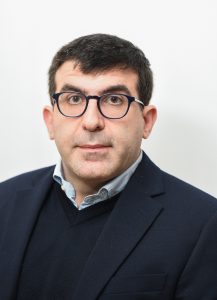 Francesco Dell’Olio is an Associate Professor in Electronics at the Polytechnic University of Bari, Italy. He has attained the National Scientific Qualification for the position of Full Professor in Electronics and Physics of Matter. He was awarded his PhD in Information & Communication Technologies in 2010. Dell’Olio is a regular member of organizing committees and program committees for international conferences, including CLEO, SPIE Photonics West, and the IEEE Photonics Conference. He is co-author of two books, published respectively by Springer and World Scientific, and 90+ papers in international peer-reviewed journals. He has been involved in several research projects funded by the Italian Ministry of University and Research, the European Space Agency, the Italian Space Agency, as well as industrial companies, some of which involved taking on roles of scientific responsibility. His research focuses on Silicon Photonics and Nanophotonics, with particular regard for modeling, design, and characterization of devices and integrated circuits for telecommunications and sensing. He has of late branched into electrochemical and colorimetric wearable sensors and miniature sensor-based embedded systems. Dell’Olio recently co-founded a startup company, WEATECHO, which is developing wearable devices for the Healthcare market. Francesco Dell’Olio is an Associate Professor in Electronics at the Polytechnic University of Bari, Italy. He has attained the National Scientific Qualification for the position of Full Professor in Electronics and Physics of Matter. He was awarded his PhD in Information & Communication Technologies in 2010. Dell’Olio is a regular member of organizing committees and program committees for international conferences, including CLEO, SPIE Photonics West, and the IEEE Photonics Conference. He is co-author of two books, published respectively by Springer and World Scientific, and 90+ papers in international peer-reviewed journals. He has been involved in several research projects funded by the Italian Ministry of University and Research, the European Space Agency, the Italian Space Agency, as well as industrial companies, some of which involved taking on roles of scientific responsibility. His research focuses on Silicon Photonics and Nanophotonics, with particular regard for modeling, design, and characterization of devices and integrated circuits for telecommunications and sensing. He has of late branched into electrochemical and colorimetric wearable sensors and miniature sensor-based embedded systems. Dell’Olio recently co-founded a startup company, WEATECHO, which is developing wearable devices for the Healthcare market.
|
| Antonio Manna |
|
Denys Nikolayev receive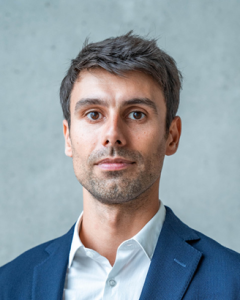 d his M.Sc. degree summa cum laude in applied electromagnetics from Lviv Polytechnic National University, Ukraine, in 2008. He earned dual Ph.D. degrees in electronics from the IETR laboratory of the French National Center for Scientific Research (CNRS), France, and in electrical engineering from the University of West Bohemia in Pilsen, Czechia, in 2017. In 2023, he obtained the “Habilitation à Diriger des Recherches” (HDR) degree from the University of Rennes, France. He served as a Postdoctoral Fellow at imec/Ghent University, Belgium, until 2018, followed by a position of a Scientist at the École Polytechnique Fédérale de Lausanne (EPFL), Switzerland, until 2020. He then joined the French National Center for Scientific Research (CNRS) as a Senior Scientist (fr. chargé de recherche). Dr. Nikolayev’s research focuses on the theoretical foundations and engineering of wireless bioelectronics. Dr. Nikolayev’s work has been recognized with several awards, including the Best Ph.D. Dissertation Award from the Fondation Rennes. He is a laureate of the ERC Starting Grant (2024), the Eiffel Excellence Doctoral Fellowship and the recipient of the ANR–NRF PRCI Research Fellowship (2021), jointly awarded by the Agence Nationale de la Recherche, France, and the National Research Foundation, Singapore. Since 2022, Dr. Nikolayev has served as an appointment member of the Section 10 of the French National Committee for Scientific Research. d his M.Sc. degree summa cum laude in applied electromagnetics from Lviv Polytechnic National University, Ukraine, in 2008. He earned dual Ph.D. degrees in electronics from the IETR laboratory of the French National Center for Scientific Research (CNRS), France, and in electrical engineering from the University of West Bohemia in Pilsen, Czechia, in 2017. In 2023, he obtained the “Habilitation à Diriger des Recherches” (HDR) degree from the University of Rennes, France. He served as a Postdoctoral Fellow at imec/Ghent University, Belgium, until 2018, followed by a position of a Scientist at the École Polytechnique Fédérale de Lausanne (EPFL), Switzerland, until 2020. He then joined the French National Center for Scientific Research (CNRS) as a Senior Scientist (fr. chargé de recherche). Dr. Nikolayev’s research focuses on the theoretical foundations and engineering of wireless bioelectronics. Dr. Nikolayev’s work has been recognized with several awards, including the Best Ph.D. Dissertation Award from the Fondation Rennes. He is a laureate of the ERC Starting Grant (2024), the Eiffel Excellence Doctoral Fellowship and the recipient of the ANR–NRF PRCI Research Fellowship (2021), jointly awarded by the Agence Nationale de la Recherche, France, and the National Research Foundation, Singapore. Since 2022, Dr. Nikolayev has served as an appointment member of the Section 10 of the French National Committee for Scientific Research.
|
|
Alessandra  Paffi is a researcher and lecturer at the Department of Information Engineering, Electronics and Telecommunications (DIET), Sapienza University of Rome. She holds a Master’s degree with honors and a Ph.D. in Electronic Engineering from Sapienza, with more than 20 years of research and teaching experience. Her research activity explores electromagnetic field interactions with biological systems, including exposure systems design, electric and magnetic stimulation of the nervous system, microdosimetry, electroporation, and multiscale modeling. She has been involved in national and European research projects as PI or unit member. She taught courses on bioelectromagnetics, high frequency electromagnetic measurements, signal processing and electromagnetic compatibility of medical devices for more than 14 years. She has also been an invited lecturer at the International School of Bioelectromagnetics “Alessandro Chiabrera”, Ettore Majorana Center, Erice. She has authored over 100 peer-reviewed publications and regularly serves as a reviewer for major international journals and conferences and has been invited speaker and organizer at numerous scientific events. Paffi is a researcher and lecturer at the Department of Information Engineering, Electronics and Telecommunications (DIET), Sapienza University of Rome. She holds a Master’s degree with honors and a Ph.D. in Electronic Engineering from Sapienza, with more than 20 years of research and teaching experience. Her research activity explores electromagnetic field interactions with biological systems, including exposure systems design, electric and magnetic stimulation of the nervous system, microdosimetry, electroporation, and multiscale modeling. She has been involved in national and European research projects as PI or unit member. She taught courses on bioelectromagnetics, high frequency electromagnetic measurements, signal processing and electromagnetic compatibility of medical devices for more than 14 years. She has also been an invited lecturer at the International School of Bioelectromagnetics “Alessandro Chiabrera”, Ettore Majorana Center, Erice. She has authored over 100 peer-reviewed publications and regularly serves as a reviewer for major international journals and conferences and has been invited speaker and organizer at numerous scientific events.
|
|
 Marie-Pierre Rols has an education in Biochemistry and Biophysics. She did a PhD in Cell Biophysics and get a position as a junior scientist in Toulouse. In 2010, she obtained the position of senior scientist. She is currently Director of Research at the IPBS-CNRS laboratory in Toulouse, France “cellular biophysics” group leader and head of the “Structural Biology and Biophysics” Department. She is member of the board of the SFNano, ISEBTT, BES societies. Her research interests lie in the fields of membrane destabilization by pulsed electric fields leading to the electropermeabilization of cells and tissues. She is involved in different aspects including the mechanisms of cell electropermeabilization, DNA electrotransfer, as well as biomedical applications for cancer treatment and gene therapy. She develops for many years a multidisciplinary approach combining Cell Biology and Biophysics. Her approach is to use various imaging tools to visualize and define these phenomena at the molecular level on models of increasing complexity: giant vesicles, cells in culture, multicellular spheroids, small animal. She has an expertise in cytotoxic drugs and nucleic acids electrotransfer and has been involved in medical applications of electroporation for cancer treatment and gene therapy (she participated to clinical trials on electrochemotherapy in humans and in horses). She also developed an expertise in the effects of RF on cells and tissues, and in the combination of nanoparticles and pulsed electric fields since these last 10 years. Marie-Pierre Rols is the author of more than 200 articles in peer-reviewed journals. She received different prizes including the Franck Reidy prize in 2021 for outstanding achievements in Bioelectrics. Marie-Pierre Rols has an education in Biochemistry and Biophysics. She did a PhD in Cell Biophysics and get a position as a junior scientist in Toulouse. In 2010, she obtained the position of senior scientist. She is currently Director of Research at the IPBS-CNRS laboratory in Toulouse, France “cellular biophysics” group leader and head of the “Structural Biology and Biophysics” Department. She is member of the board of the SFNano, ISEBTT, BES societies. Her research interests lie in the fields of membrane destabilization by pulsed electric fields leading to the electropermeabilization of cells and tissues. She is involved in different aspects including the mechanisms of cell electropermeabilization, DNA electrotransfer, as well as biomedical applications for cancer treatment and gene therapy. She develops for many years a multidisciplinary approach combining Cell Biology and Biophysics. Her approach is to use various imaging tools to visualize and define these phenomena at the molecular level on models of increasing complexity: giant vesicles, cells in culture, multicellular spheroids, small animal. She has an expertise in cytotoxic drugs and nucleic acids electrotransfer and has been involved in medical applications of electroporation for cancer treatment and gene therapy (she participated to clinical trials on electrochemotherapy in humans and in horses). She also developed an expertise in the effects of RF on cells and tissues, and in the combination of nanoparticles and pulsed electric fields since these last 10 years. Marie-Pierre Rols is the author of more than 200 articles in peer-reviewed journals. She received different prizes including the Franck Reidy prize in 2021 for outstanding achievements in Bioelectrics.
|
Maria Rosaria Scarfì u ntil April 2024 was Research Director and head of the Bioelectromagnetics Unit at the CNR, Institute for the Electromagnetic Sensing of the Environment (IREA), Naples, Italy. Currently she is Associate Senior Researcher at CNR-IREA. Her main research activities are in the evaluation of in vitro biological effects of non-ionizing electromagnetic fields, from static fields to THz. She is also involved in the evaluation of biological effects induced in cell cultures exposed to high voltage, micro- and nano-second electric pulses. She has been responsible for the IREA group in the framework of the International Bioelectric Consortium. She authored or co-authored more than 120 papers in peer-reviewed journals. She has been external expert of the Working Group on Electromagnetic Fields for the “Opinion on the potential health effects of exposure to electromagnetic fields”, EU Commission – SCENIHR; she is a member of the core group for the preparation of the World Health Organization monograph on risk assessment for RF fields and member of the Scientific Committee of the Swedish Radiation Safety Authority – Electromagnetic Fields. She was a board-member of the European Bioelectromagnetics Association (EBEA) and of the Bioelectromagnetic Society (BEMS). She served as Associated Editor for several peer-reviewed journals (Bioelectromagnetics, PlosOne, Scientific report). Since 2017 she is the co-Director of the International School of Biolectromagnetism “A. Chiabrera” at the Foundation and Centre for Scientific Culture E. Majorana (Erice, Sicily). ntil April 2024 was Research Director and head of the Bioelectromagnetics Unit at the CNR, Institute for the Electromagnetic Sensing of the Environment (IREA), Naples, Italy. Currently she is Associate Senior Researcher at CNR-IREA. Her main research activities are in the evaluation of in vitro biological effects of non-ionizing electromagnetic fields, from static fields to THz. She is also involved in the evaluation of biological effects induced in cell cultures exposed to high voltage, micro- and nano-second electric pulses. She has been responsible for the IREA group in the framework of the International Bioelectric Consortium. She authored or co-authored more than 120 papers in peer-reviewed journals. She has been external expert of the Working Group on Electromagnetic Fields for the “Opinion on the potential health effects of exposure to electromagnetic fields”, EU Commission – SCENIHR; she is a member of the core group for the preparation of the World Health Organization monograph on risk assessment for RF fields and member of the Scientific Committee of the Swedish Radiation Safety Authority – Electromagnetic Fields. She was a board-member of the European Bioelectromagnetics Association (EBEA) and of the Bioelectromagnetic Society (BEMS). She served as Associated Editor for several peer-reviewed journals (Bioelectromagnetics, PlosOne, Scientific report). Since 2017 she is the co-Director of the International School of Biolectromagnetism “A. Chiabrera” at the Foundation and Centre for Scientific Culture E. Majorana (Erice, Sicily). |
|
 Raffaele Solimene is Full Professor of Electromagnetic Fields at the University of Campania “Luigi Vanvitelli”, Italy. His research lies at the intersection of electromagnetic inverse problems, radar sensing, and microwave imaging, with applications to remote sensing, subsurface diagnostics, ground-penetrating radar, and biomedical electromagnetic imaging. His work has contributed to the theoretical and methodological development of inverse scattering and electromagnetic imaging, with particular emphasis on sampling, information content, and resolution limits in radar imaging systems. He has authored more than 300 scientific publications in international journals and conferences and has led or participated in numerous national and international research projects in radar sensing and microwave diagnostics. Prof. Solimene currently serves as Coordinator of the PhD Programme in Industrial and Information Engineering at the University of Campania and as member of the Board of Directors of National Inter-University Consortium for Telecommunications (CNIT). He is also member of the Italian National Scientific Qualification (ASN) Committee for Electromagnetic Fields, responsible for the evaluation of candidates for Associate and Full Professorship, and Chair of the Scientific and Technical Committee of CORISTA (Research Consortium on Advanced Remote Sensing Systems). He has long-standing editorial and reviewing experience for leading journals in electromagnetics, radar, and remote sensing, including IEEE Geoscience and Remote Sensing Letters. He is a Senior Member of Institute of Electrical and Electronics Engineers and International Union of Radio Science. Raffaele Solimene is Full Professor of Electromagnetic Fields at the University of Campania “Luigi Vanvitelli”, Italy. His research lies at the intersection of electromagnetic inverse problems, radar sensing, and microwave imaging, with applications to remote sensing, subsurface diagnostics, ground-penetrating radar, and biomedical electromagnetic imaging. His work has contributed to the theoretical and methodological development of inverse scattering and electromagnetic imaging, with particular emphasis on sampling, information content, and resolution limits in radar imaging systems. He has authored more than 300 scientific publications in international journals and conferences and has led or participated in numerous national and international research projects in radar sensing and microwave diagnostics. Prof. Solimene currently serves as Coordinator of the PhD Programme in Industrial and Information Engineering at the University of Campania and as member of the Board of Directors of National Inter-University Consortium for Telecommunications (CNIT). He is also member of the Italian National Scientific Qualification (ASN) Committee for Electromagnetic Fields, responsible for the evaluation of candidates for Associate and Full Professorship, and Chair of the Scientific and Technical Committee of CORISTA (Research Consortium on Advanced Remote Sensing Systems). He has long-standing editorial and reviewing experience for leading journals in electromagnetics, radar, and remote sensing, including IEEE Geoscience and Remote Sensing Letters. He is a Senior Member of Institute of Electrical and Electronics Engineers and International Union of Radio Science.
|
| Oliver Soppera is Directeur de Recherche at IS2M (CNRS, Université de Haute-Alsace, Mulhouse, France). He is graduated from Ecole Normale Supérieure de Cachan, agrégé de chimie (1998) and PhD in physical-chemistry at Université de Haute‐Alsace. He had a post-doc position at Porto University (Marie Curie Fellowship) and then integrated CNRS as a chargé de recherche at Départment of Photochemistry in 2003. Since then, he has been working on photochemistry, photomaterials, plasmonic, micro-nano-fabrication for applications in optics, photonics, and sensors. In particular he was involved in research project developing photopolymerisable molecularly imprinted polymers for high sensitivity and high specificity optical sensors. He his author or co-author of more than 190 peer-reviewed papers, 5 book chapters, 8 patents, more than 120 papers in international conferences (40 invited papers). He received CNRS Bronze Medal and France-Taiwan Prize of French Académie des Sciences in 2022. |
| Marco Spirito |
| Luigi Zeni |
